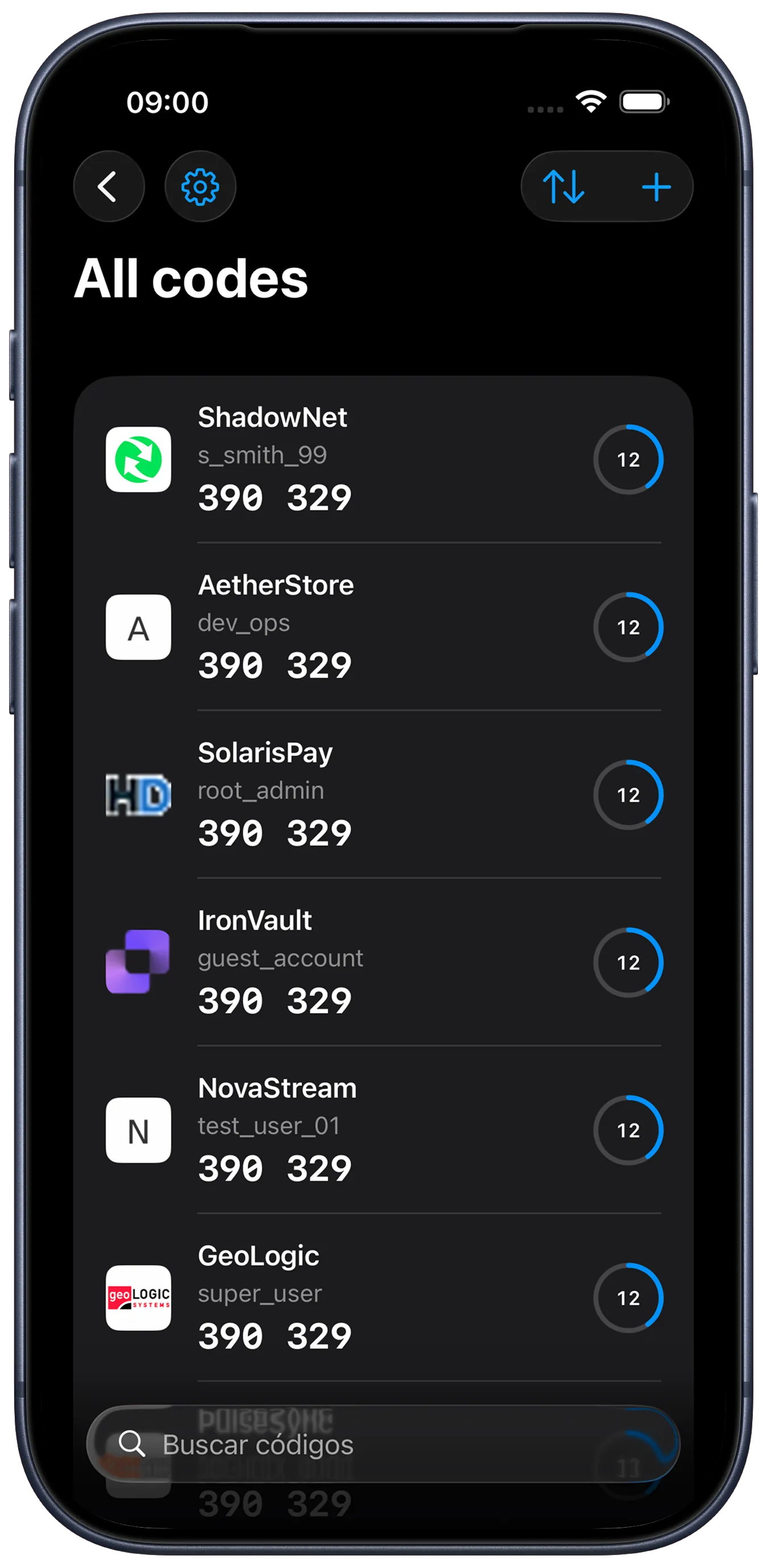
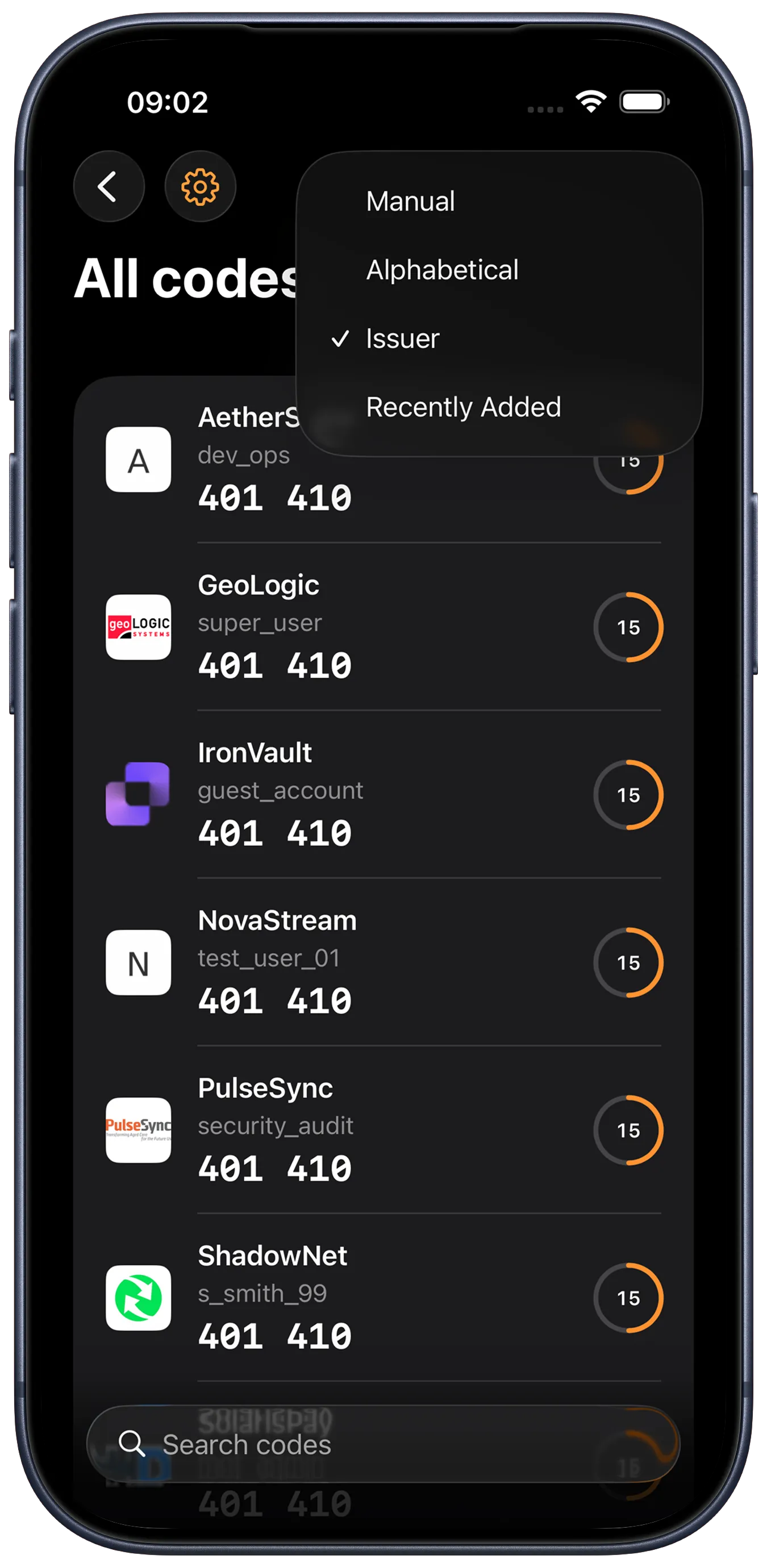
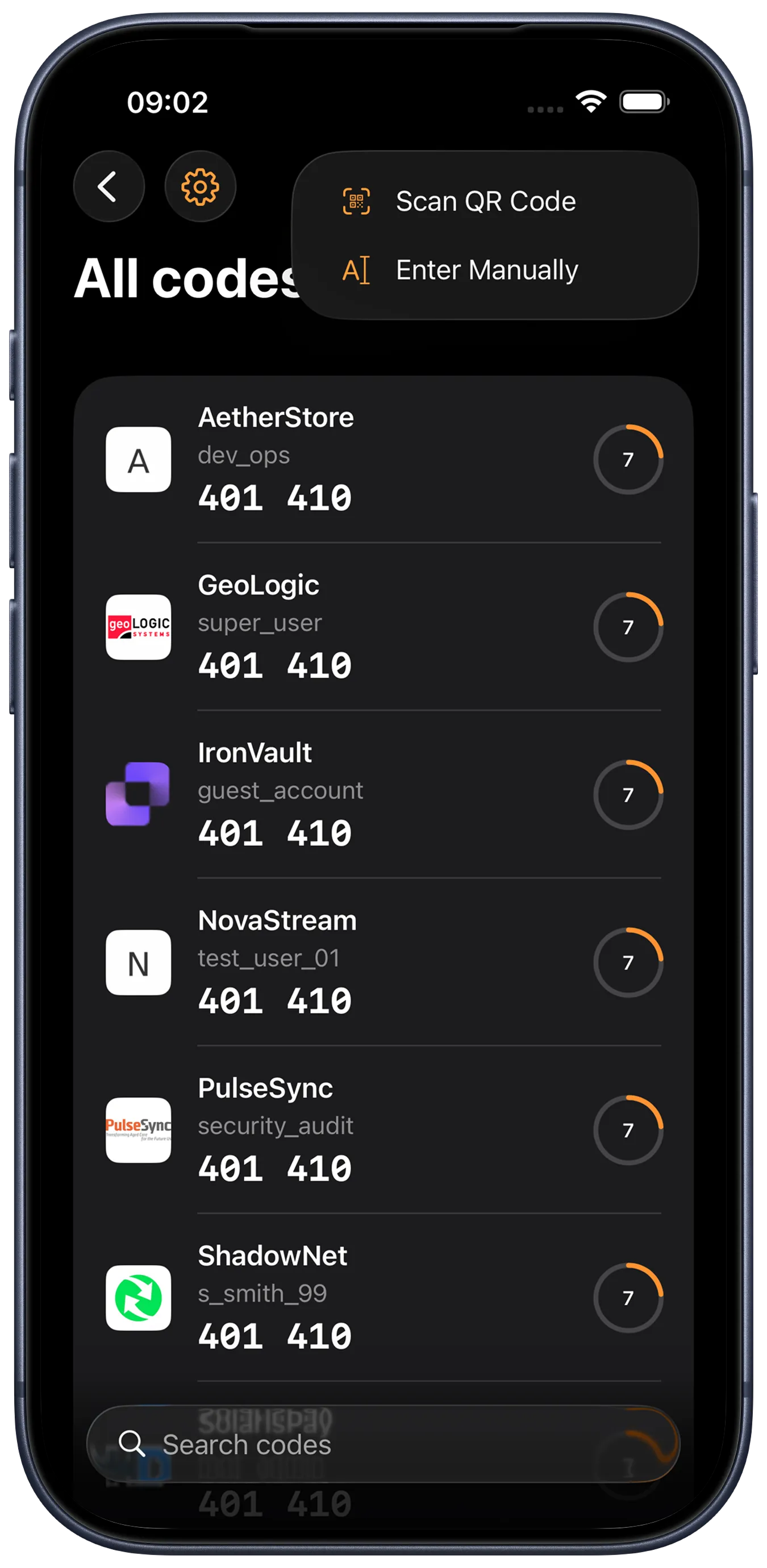
O contador é derivado do tempo Unix e passa por HMAC com o segredo do usuário. É então truncado em um código numérico conforme a especificação. As entradas são limitadas para evitar que problemas no tempo do sistema travem o app.
static func generateCode(
    secret: Data,
    algorithm: TOTPAlgorithm,
    digits: Int,
    period: Int,
    date: Date = .now
) -> String {
    let safePeriod = max(1, period)
    let safeDigits = max(1, min(9, digits))
    let timestamp = max(0, date.timeIntervalSince1970)
    let counter = UInt64(timestamp) / UInt64(safePeriod)
    var bigEndianCounter = counter.bigEndian
    let counterData = withUnsafeBytes(of: &bigEndianCounter) { Data($0) }
    let key = SymmetricKey(data: secret)

    let hmacBytes: [UInt8]
    switch algorithm {
    case .sha1:
        hmacBytes = Array(HMAC<Insecure.SHA1>.authenticationCode(for: counterData, using: key))
    case .sha256:
        hmacBytes = Array(HMAC<SHA256>.authenticationCode(for: counterData, using: key))
    case .sha512:
        hmacBytes = Array(HMAC<SHA512>.authenticationCode(for: counterData, using: key))
    }

    guard hmacBytes.count >= 4, let last = hmacBytes.last else {
        return String(repeating: "0", count: safeDigits)
    }

    let offset = Int(last & 0x0F)
    guard offset + 3 < hmacBytes.count else {
        return String(repeating: "0", count: safeDigits)
    }

    let truncated: UInt32 =
        (UInt32(hmacBytes[offset] & 0x7F) << 24)
        | (UInt32(hmacBytes[offset + 1]) << 16)
        | (UInt32(hmacBytes[offset + 2]) << 8)
        | UInt32(hmacBytes[offset + 3])

    var modulo: UInt32 = 1
    for _ in 0..<safeDigits {
        modulo *= 10
    }

    let code = truncated % modulo
    return String(format: "%0\(safeDigits)d", code)
}